Patio Screen Enclosures in Miami-Dade
Palacios Screen & Enclosures designs, permits and builds custom aluminum patio screen enclosures for homes across Miami-Dade. Whether you want to screen in the covered patio you already have, add a new screen room with an insulated roof, or enclose your lanai so you can use it all year without mosquitoes, our team handles the entire project: measurement, engineering, permits and installation.
We have been building screen enclosures in South Florida for more than 19 years from our shop at 10100 SW 37th St in Miami. We are a licensed and insured aluminum specialty contractor, and every enclosure we build is engineered for the wind loads Miami-Dade requires. If you are comparing options, you can also see our full range of screen enclosures, including pool screen enclosures.
Types of Patio Screen Enclosures We Build
No two patios are the same, so every enclosure we build is custom-measured and designed for the house it attaches to. Most of our patio projects fall into one of these three categories.
Screen enclosure under an existing roof
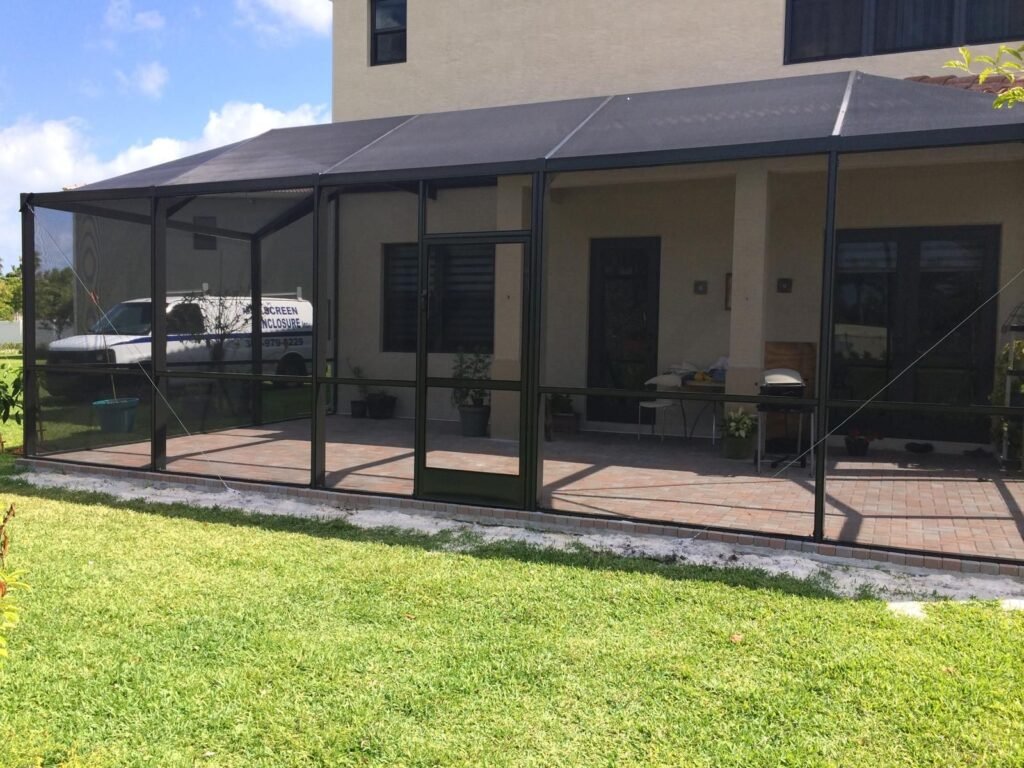
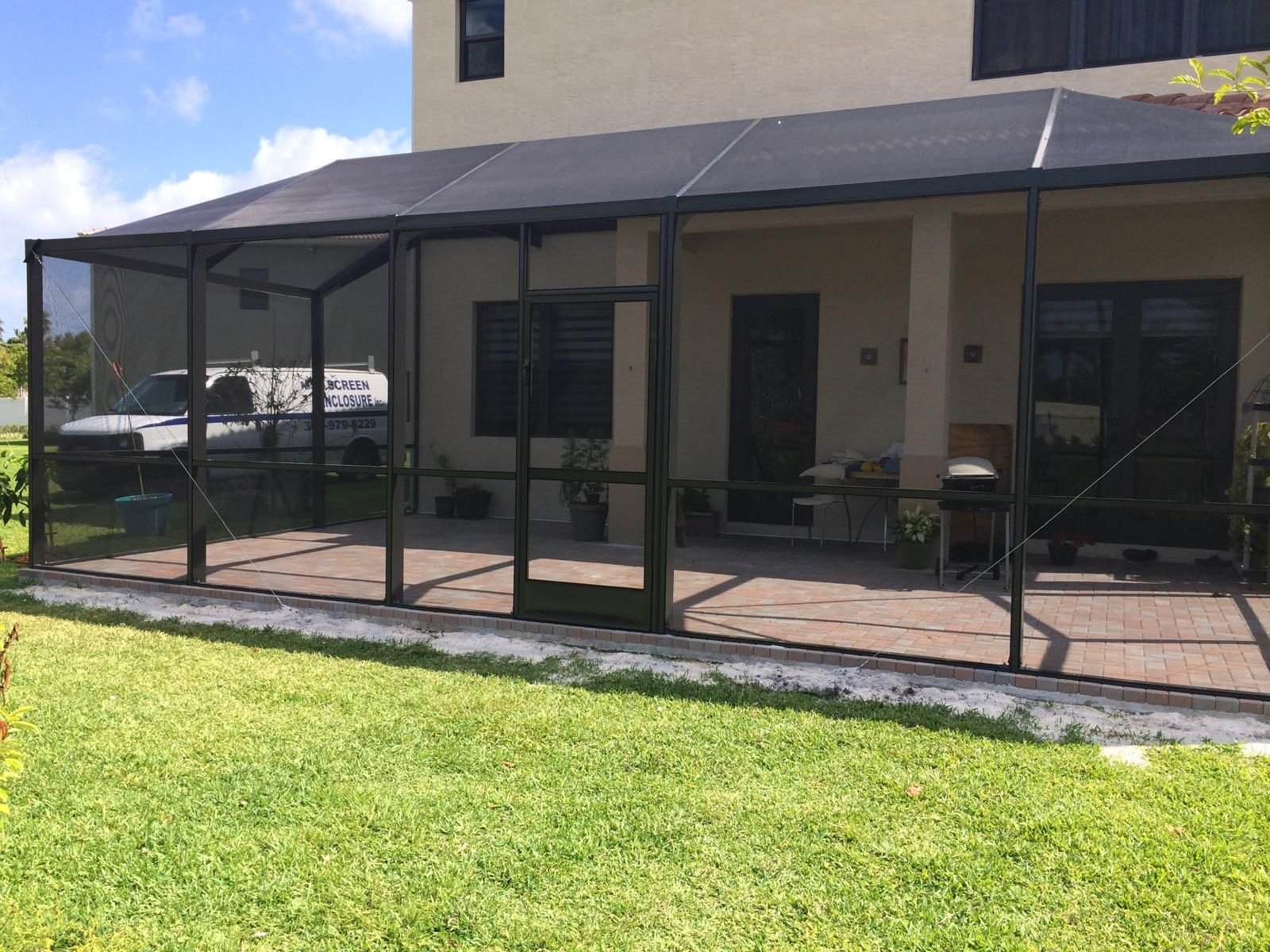
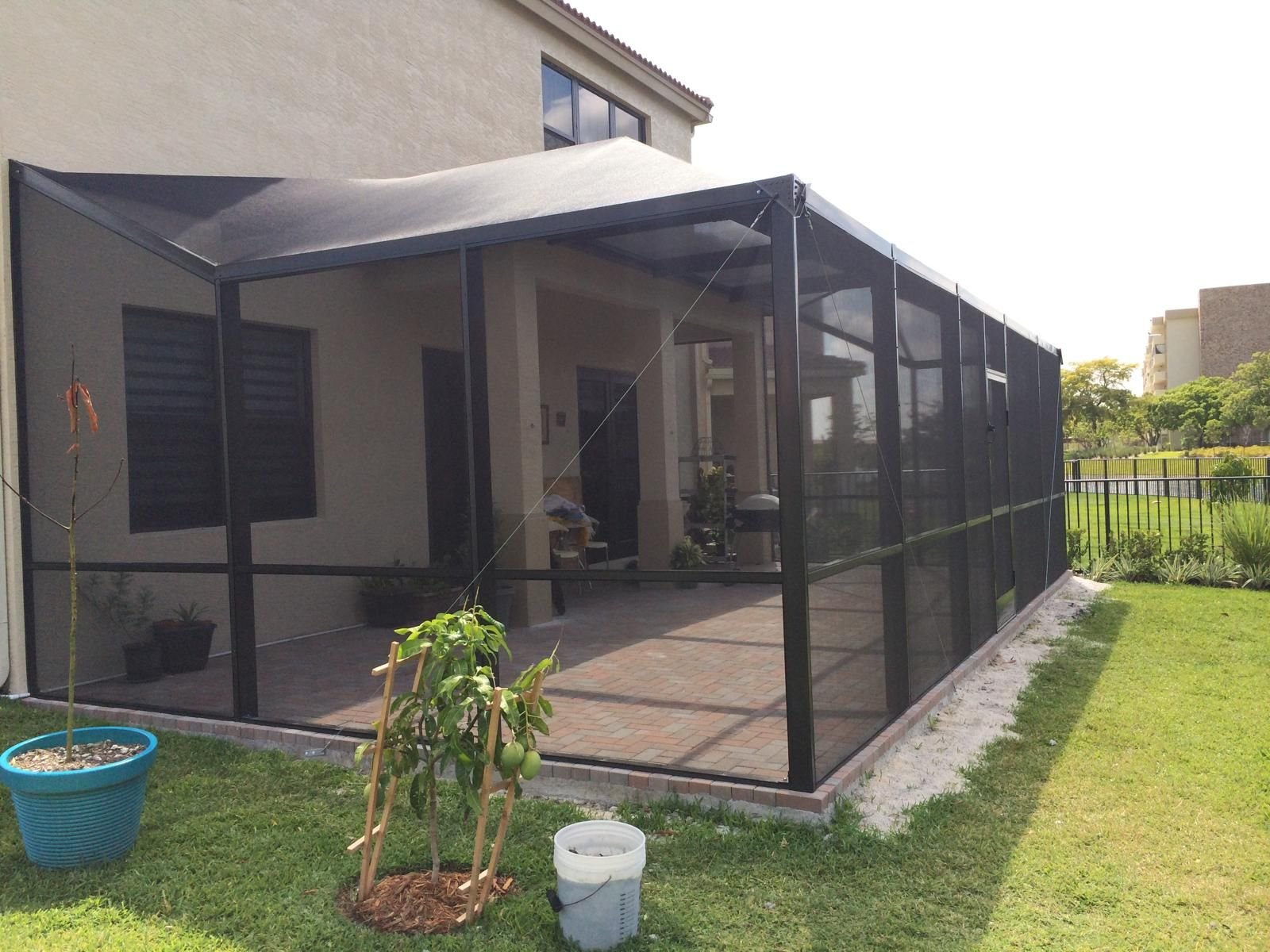
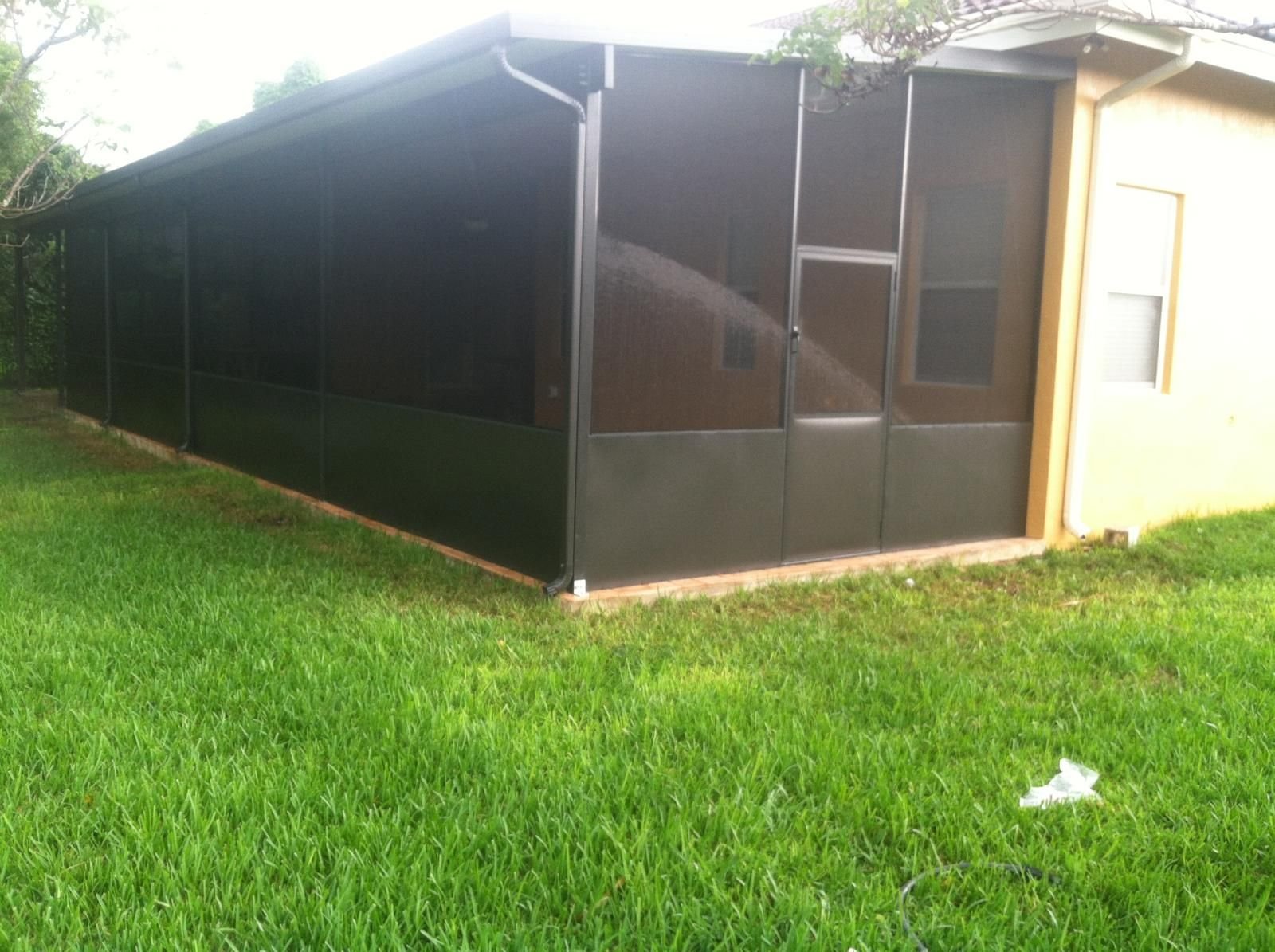
If you already have a covered patio, a concrete-roof terrace or an aluminum patio cover, we can screen it in by installing aluminum framing between the existing roof, the columns and the slab. This is usually the fastest and most affordable way to get a bug-free outdoor room, because the roof is already there. We typically add a kick plate at the bottom for protection from pets, lawn equipment and splashing, plus a screen door with a closer.
Patio enclosure with an insulated roof
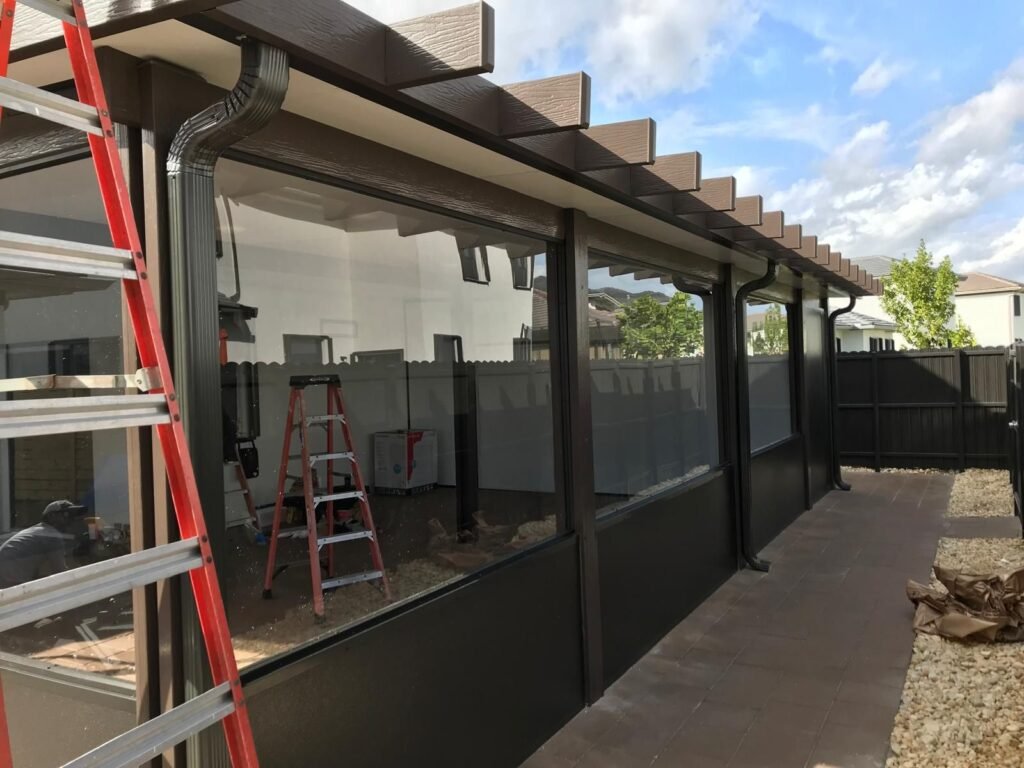
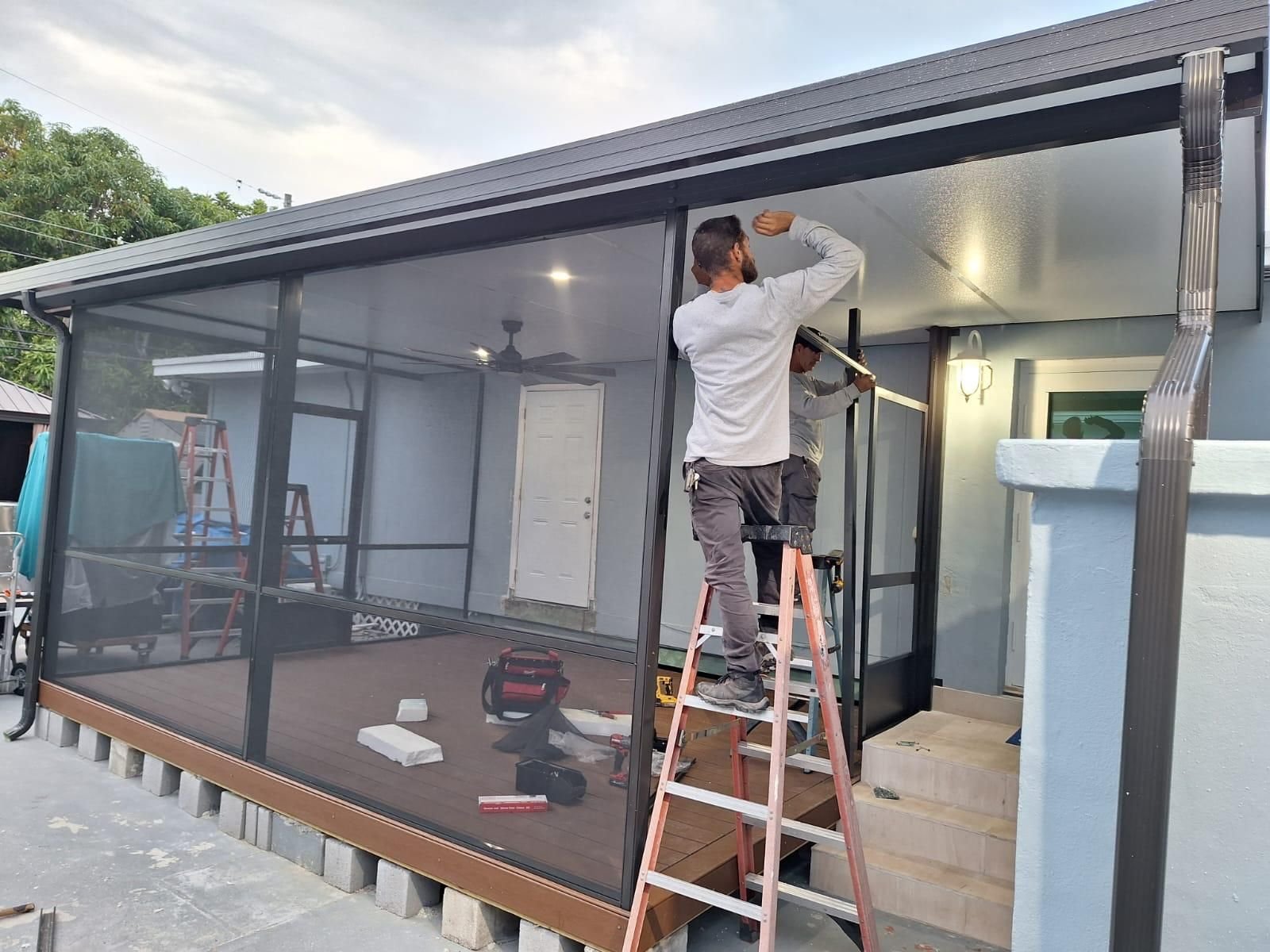
When there is no roof yet, we can build the enclosure together with an insulated aluminum roof. Insulated panels block direct sun and rain, keep the space noticeably cooler than an open screen roof, and allow you to add ceiling fans and lights. The result is a true screen room that you can use in the middle of summer or during an afternoon storm.
Lanai screen enclosures
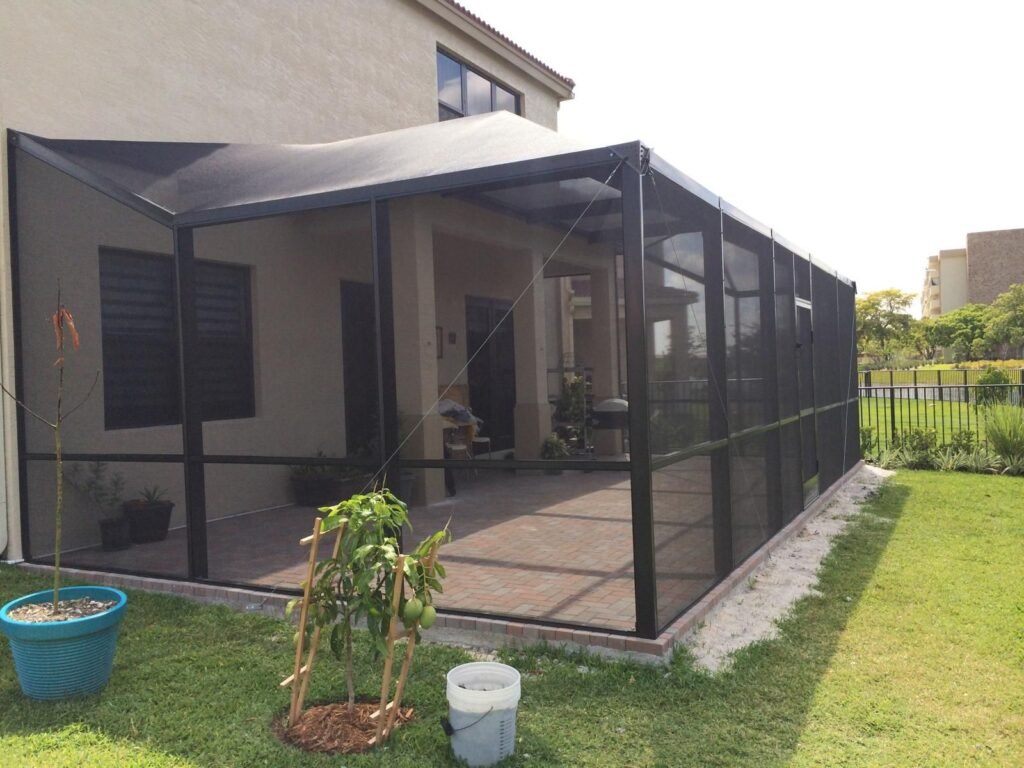
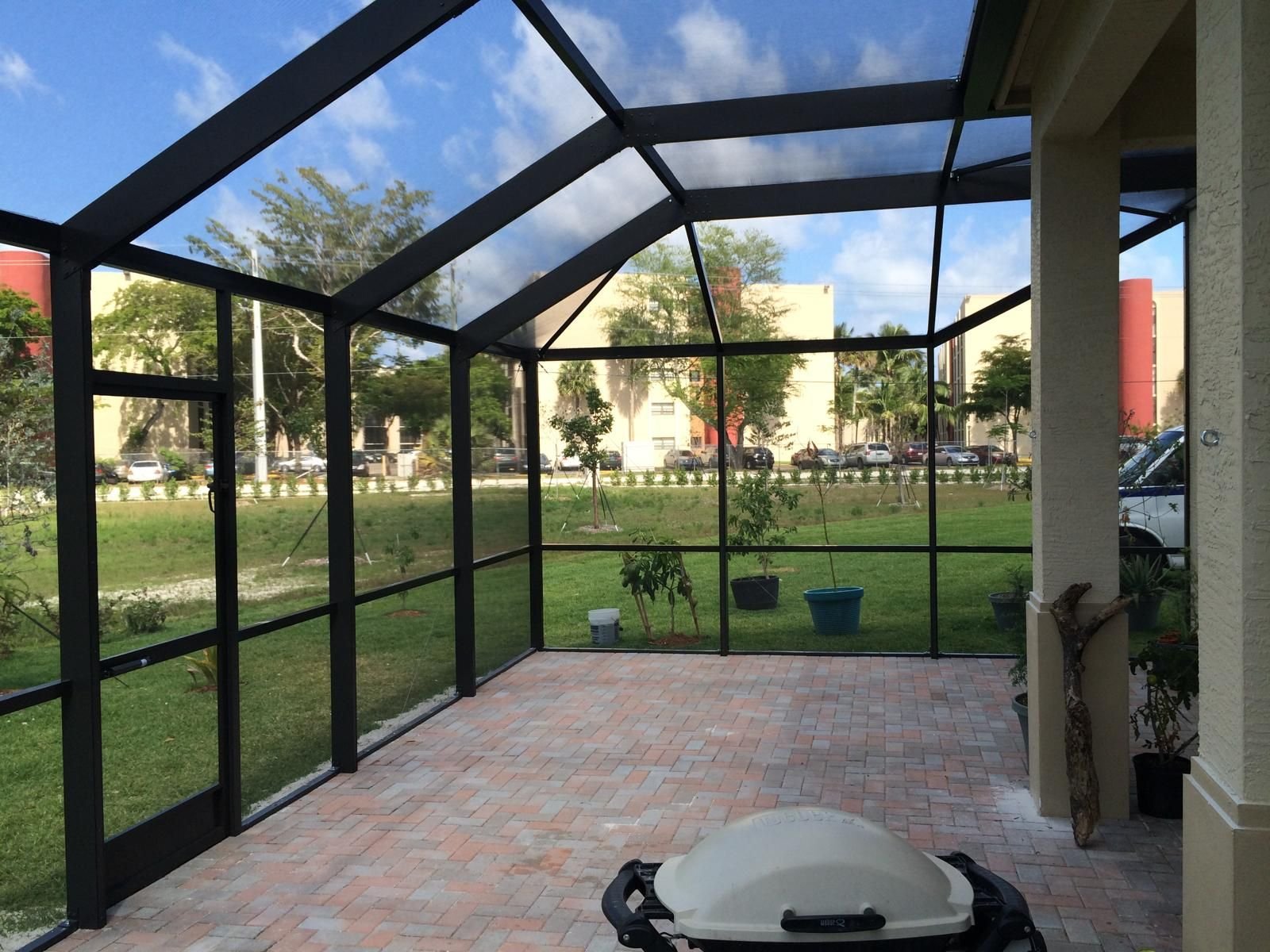
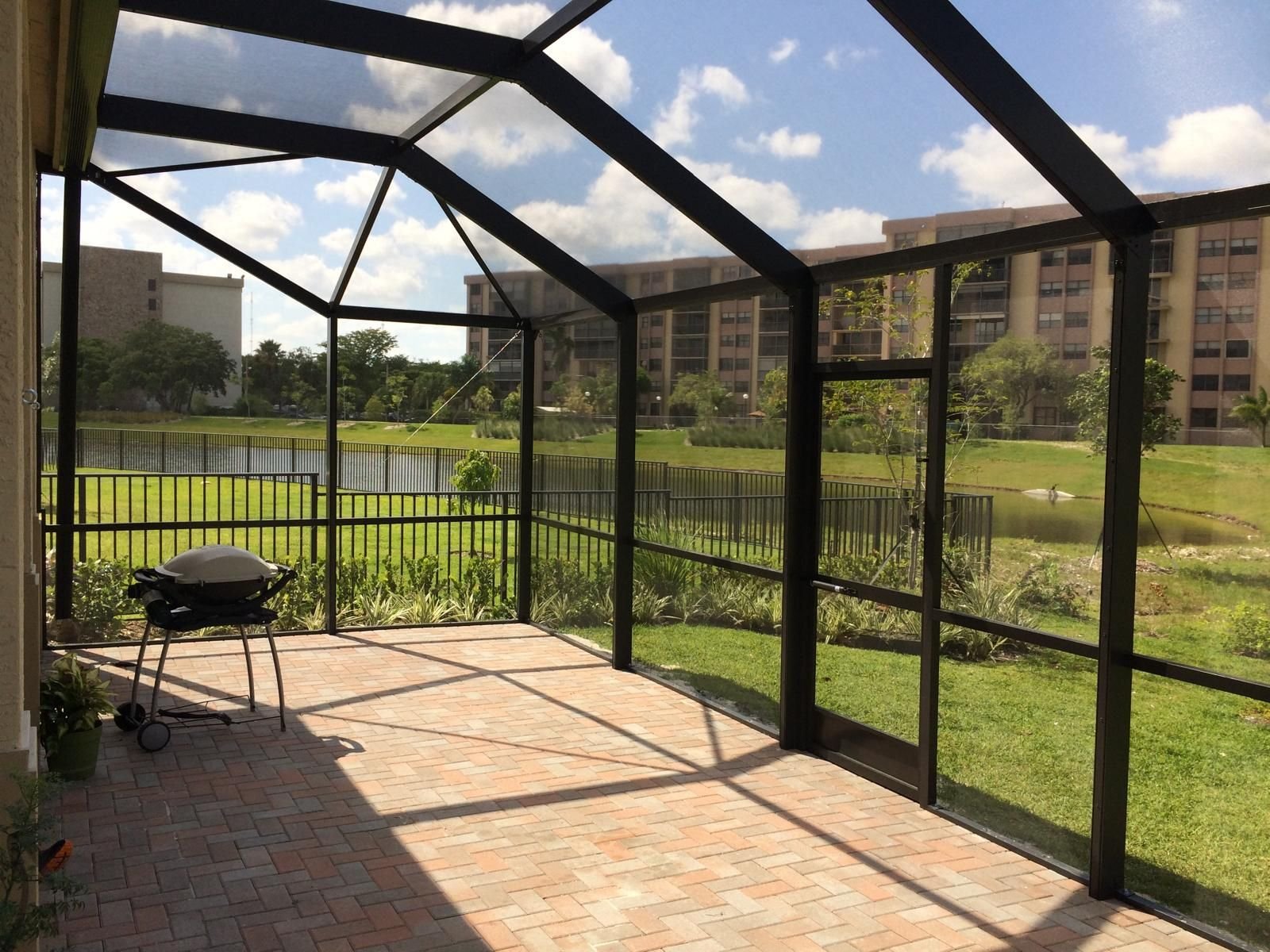
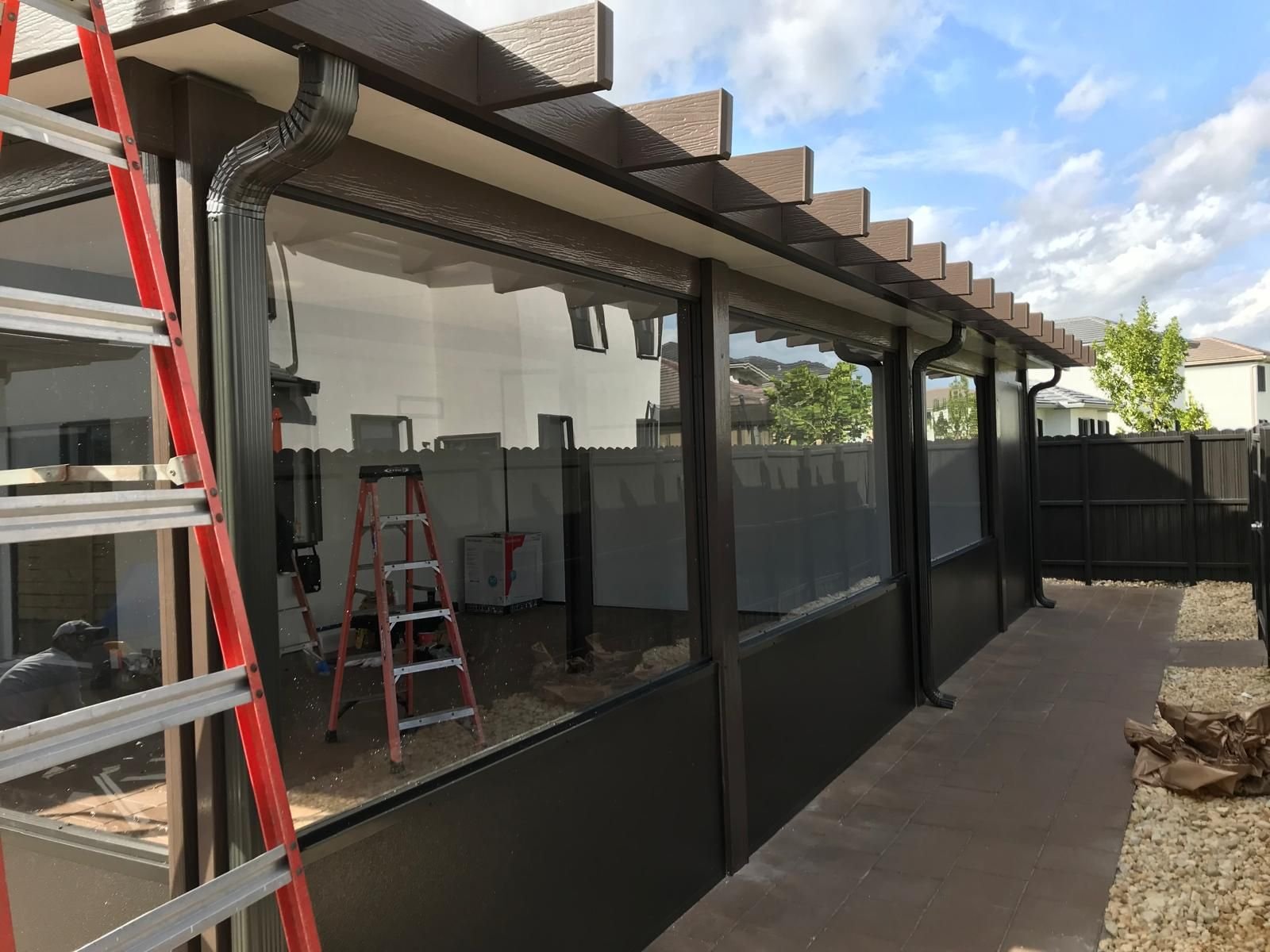
A lanai is a patio that is attached to the house and open to the yard. Lanai enclosures can use a full screen roof (mansard, gable or flat style) that lets in natural light, or combine screen walls with a solid roof section near the house. They are a popular choice for homeowners who want an outdoor dining or lounge area connected directly to the living room.
Aluminum Frames and Screen Mesh Options
All our patio enclosures are built with extruded aluminum framing. Aluminum does not rust, rot or attract termites, and with a factory finish in bronze, black or white it requires very little maintenance in Miami’s heat and humidity. The structure is anchored to your slab or a footer according to the engineered plans.
The screen is where most of the customization happens:
- Standard mesh (18/14): the most common fiberglass screen. It keeps out mosquitoes and flies, offers good visibility and airflow, and is the most economical option.
- No-see-um mesh (20/20): a tighter weave that blocks tiny biting insects (“no-see-ums”) that pass through standard screen. Highly recommended near canals, lakes and mangroves.
- Privacy and solar screens: denser fabrics that reduce visibility from neighbors and cut sun and glare, which helps keep the patio cooler. They can be used on one wall or the whole enclosure.
- Heavy-duty and pet-resistant screens: thicker meshes, such as Super Screen and pet screen, that resist tears from pets, kids and debris. They are the toughest options for a patio enclosure.
We can mix materials in the same project, for example no-see-um mesh on the walls and privacy screen on the side facing your neighbor.
Florida Building Code, Miami-Dade Permits and Wind Resistance
Miami-Dade and Broward are part of the High-Velocity Hurricane Zone (HVHZ) defined in the Florida Building Code, which has some of the strictest wind-load requirements in the country. A patio screen enclosure is a permanent aluminum structure, so in most cases it requires a building permit.
- Engineering: we provide signed and sealed drawings that specify the size of the aluminum members, the spacing and the anchoring needed for your location’s design wind speed and exposure.
- Permits: we file the permit with Miami-Dade County or with your city’s building department (for example, City of Miami, Coral Gables, Doral or Hialeah) and coordinate the required inspections.
- Approved products: roof panels and other components are selected from products with Florida Product Approval or Miami-Dade Notice of Acceptance (NOA) when required.
- HOA approval: if your community has an HOA, we can prepare the drawings and material details they usually ask for.
Building without a permit can cause problems when you sell the house or file an insurance claim, so we always build to code. Read more in our guide to Miami-Dade screen enclosure regulations.
How Much Does a Patio Screen Enclosure Cost in Miami?
Here are typical 2026 price ranges for a patio screen enclosure in Miami-Dade. They are taken from our screen enclosure cost guide, where you will find the full breakdown.
| Project | Typical cost |
|---|---|
| Small patio (about 8×10 ft) | $1,800 – $3,200 |
| Medium patio (about 10×20 ft) | $3,500 – $6,500 |
| Large patio (about 20×30 ft) | $7,000 – $12,000+ |
| Full rescreening of an existing patio enclosure | $1,200 – $2,500 |
| Permit fees | $250 – $900 |
| Engineering | $300 – $700 |
The final price depends on the size and height of the enclosure, whether it needs its own roof (screen or insulated), the type of screen, the number of doors, kick plates and the engineering your location requires. These are general market ranges; an exact number requires an on-site measurement, which we do for free.
Our Patio Enclosure Installation Process
- Free on-site estimate. We visit your home, measure the patio, check the slab and the roof connection, and talk about how you want to use the space.
- Design and quote. You receive a written quote with the frame color, screen type, doors and roof option you choose.
- Engineering and permits. We prepare the signed and sealed drawings, submit the permit and, if needed, the HOA application.
- Installation. Our own crew installs the frame, anchors, doors and screen. On-site work for a typical patio usually takes only a few days.
- Inspection and walkthrough. We coordinate the final inspection and walk you through the finished enclosure and its care.
From signed contract to finished enclosure, most patio projects take about two to four weeks, including permitting. If you have water collecting on your patio, ask us about gutters and drainage during the estimate; our article on patio drainage and super gutters explains the options.
Recent Patio Screen Enclosure Projects in Miami
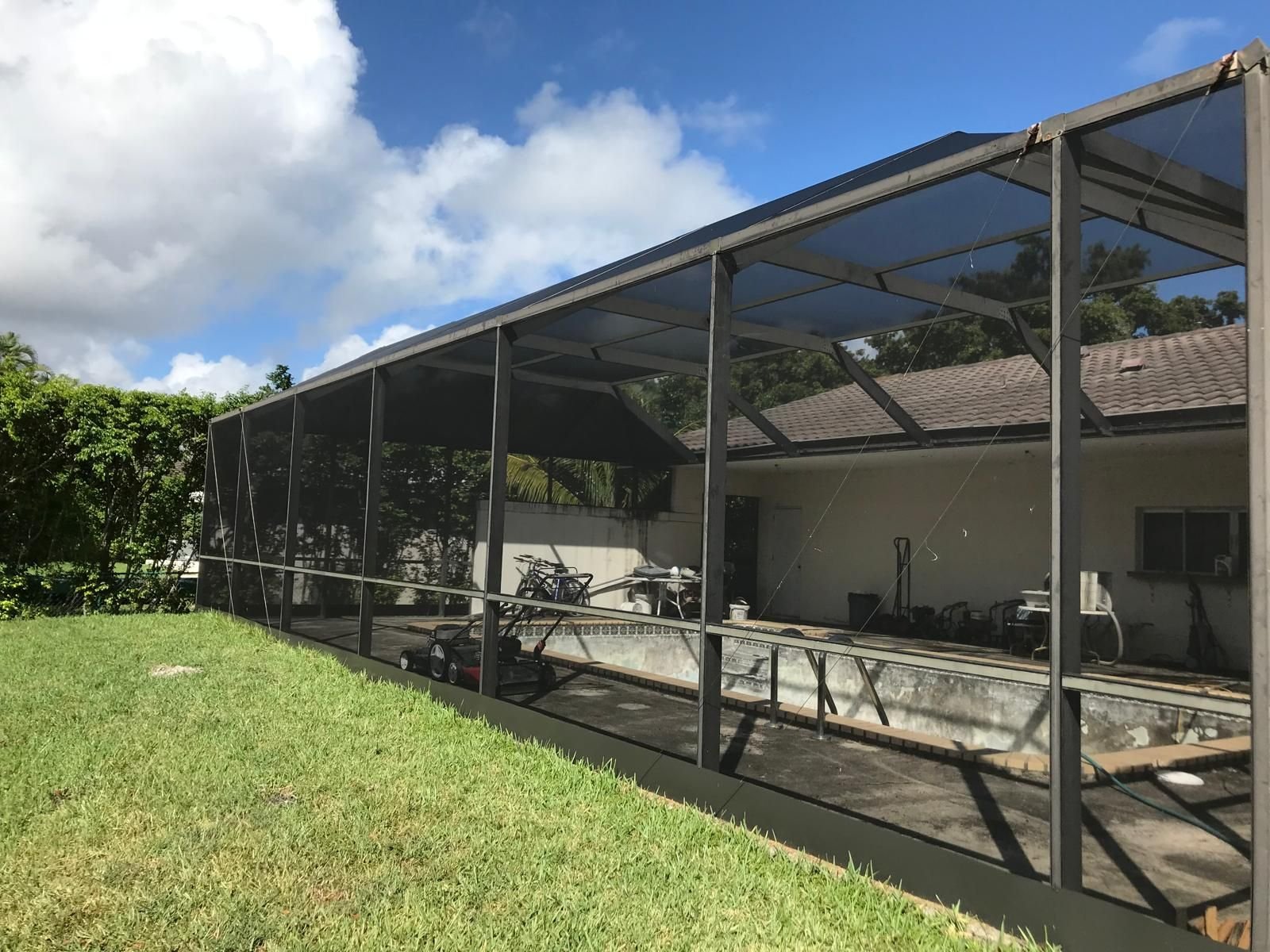
These are real patio and lanai enclosures built by our team in Miami-Dade. See more work on our projects page.
What Our Customers Say
Homeowners across Miami-Dade have trusted us with their screen enclosures, patios and repairs. Here is what some of them say on Google.
Frequently Asked Questions
How do I screen in my covered patio?
To screen in a covered patio, an aluminum frame is installed between the existing roof, the columns and the slab, and then screen panels and a door are added. In Miami-Dade the frame must be engineered and anchored for local wind loads, and a building permit is usually required. A contractor measures the space, prepares the engineered drawings, pulls the permit and installs the frame, kick plate, door and screen, which typically takes only a few days on site.
What are screen enclosures?
Screen enclosures are aluminum structures covered with insect screen that enclose a patio, lanai, porch or pool. They keep out mosquitoes, flies, leaves and debris while letting air and light through, turning an outdoor area into a usable room. They can have a screen roof, an insulated solid roof, or be installed under an existing roof.
What is the strongest screening material?
For screen enclosures, heavy-duty polyester meshes such as Super Screen and pet-resistant screens are the strongest common options. They are much thicker and more tear-resistant than standard 18/14 fiberglass mesh and hold up better to pets, debris and strong winds. Stainless steel mesh is even stronger, but it is rarely used for full enclosures because of its cost.
How much is a lanai screen?
In Miami-Dade, a new lanai or patio screen enclosure typically costs between $1,800 for a small patio and $12,000 or more for a large one in 2026. Rescreening an existing lanai enclosure usually costs $1,200 to $2,500. The price depends on size, height, roof type, screen material, doors and the engineering and permits required.
Do I need a permit for a patio screen enclosure in Miami-Dade?
In most cases, yes. A new patio screen enclosure is a permanent aluminum structure, so Miami-Dade County and most cities require a building permit with engineered drawings. Rescreening an existing enclosure with the same type of screen generally does not require a new structural permit, but it is best to confirm with your local building department.
How long does a patio screen enclosure last?
A well-built aluminum patio enclosure typically lasts 15 to 25 years in South Florida. The screen itself usually needs to be replaced once or twice during that time, depending on sun exposure, pets and storms.
Get a Free Patio Screen Enclosure Quote
Tell us about your patio and we will schedule a free on-site measurement anywhere in Miami-Dade. You will get a clear, written quote with no obligation.


